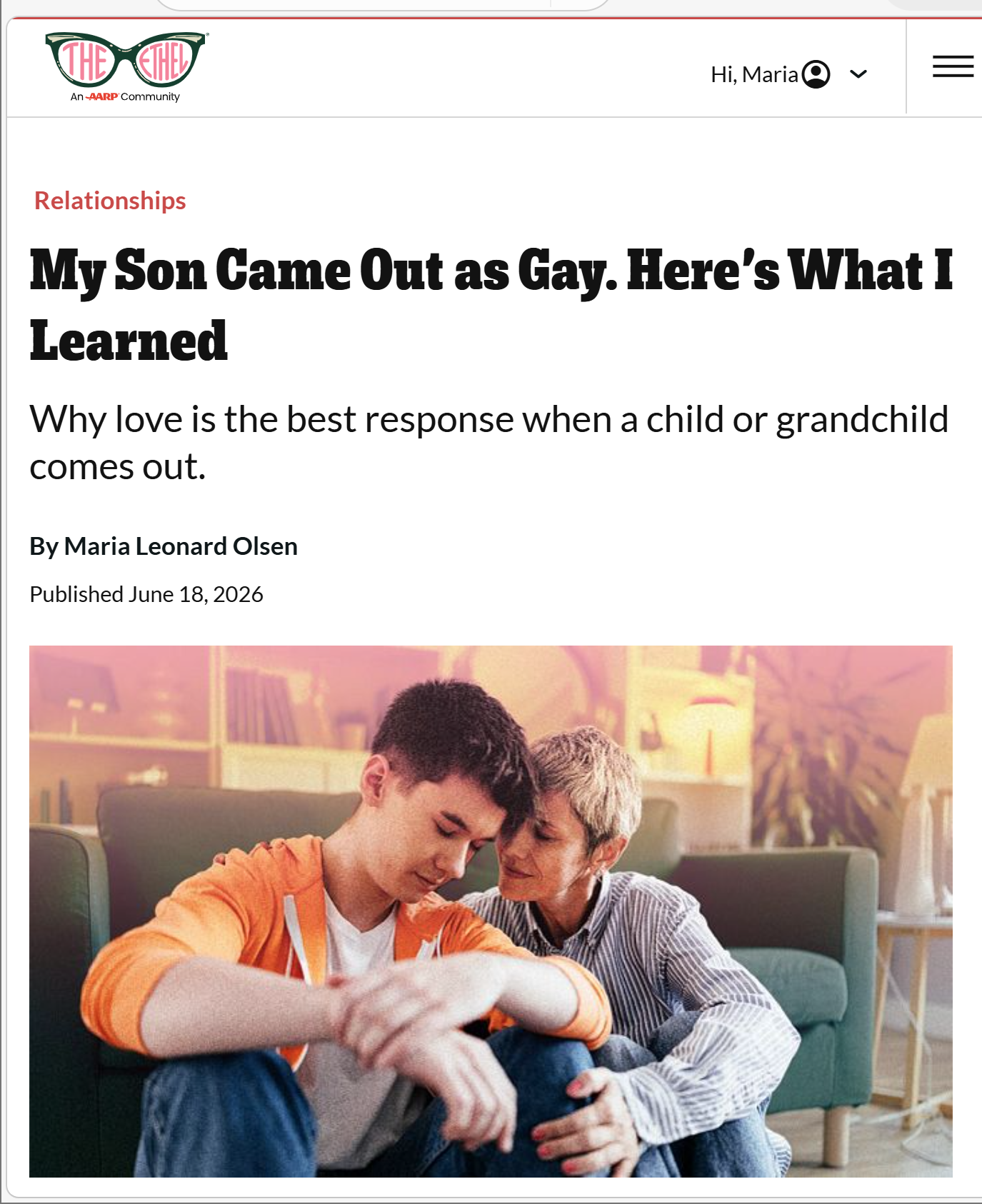
My son Chris came out as gay to a group of friends during middle school. When he returned home that day, I brought up what I had heard from his friend’s mother. “Kids can be cruel,” I said. “Everyone is trying to fit in at your age, and your sexuality is no one’s business but your own. Your sister is not required to let people know that she is heterosexual.”
I had a feeling that my son was gay very early in his life. He preferred to play with girls and was more interested in typical girl things than what our society assumes boys will like.
Having a gay child was not a problem in our family, though I worried about the prejudice he likely would encounter. When he was a student at a Catholic elementary school, I was called into the principal’s office because they were worried that he only wanted to sit and play with his female classmates. Then, when I met with the monsignor about it, he said that being gay is not a sin according to the Catholic Church, but acting on it is, “just as any sex outside of marriage” is considered sinful.
We moved him out of that school and stopped attending Mass at that parish. At the new school, because the popular girls loved him, only the unpopular boys picked on him. He was vulnerable to those who did not feel good about themselves and went after easy targets.
I also suffered hurtful remarks from people about my son. One mom who learned he was gay said to me, “What a big cross it must be for you to bear. I will pray for you.” I was momentarily speechless. “I do not consider it to be a cross, and I will pray for you, too,” I countered and walked away.
The worst comment was from a former friend who said, “Well, at least it wasn’t your fault, since his [paternal] aunt is gay.” I no longer associate with that person.
His grandmother, my mom, who died recently, initially had a hard time with my son’s sexuality. She asked me not to tell any of her friends, especially when we visited her home country, the Philippines. I refused. The conflict came to a head when my son confronted her about how cold she had been to his then-boyfriend.
She came around to full acceptance and even did TikToks with him on his wildly popular account, often delivering memorable lines that went viral, like encouraging him to marry a doctor. Sometimes people recognized her on the street because of my son’s social media and asked for photographs. She reveled in the attention!
I became an ally and sought to learn as much as I could about issues facing the LGBTQIA+ community. I became an LGBTQIA+ radio show host and wrote articles about matters important to queer folk. I attended Pride festivals carrying a sign that said, “I love my kids, gay and straight.” Kids approached me in tears at the events, telling me about their parents’ rejection when they came out and appreciating my hugs.
I joined PFLAG, the nation’s largest organization dedicated to supporting, educating and advocating for LGBTQIA+ people. I agree with their tips for supporting LGBTQIA+ children, to lead with love, listen with intention, show support and learn the acceptable terms around sexual orientation.
Psychologist Dr. Nicole Cutts says that children who come out need emotional safety. “When a child comes out, it is not a moment that calls for fixing, interpreting or reacting from fear,” says Dr. Cutts. “It is a moment that calls for presence. The child is taking a risk by telling the truth about who they are, and what they are looking for in that moment is some indication that the relationship is still secure. When parents respond with openness, calm and a willingness to listen, they communicate something far more powerful than any words. They communicate, ‘You are safe here.’”
We all worry about saying the wrong thing and may never get our responses right all of the time. I certainly misstepped when being too nosy. I realize that I was sometimes overprotective. But we all can continue to learn.
As for my son, I made sure I recognized and empowered his talents. He loved theater and I enrolled him in drama activities. He thrived in these artistic communities, which are typically safe spaces for all persons. He followed his passions, becoming an actor, singer and gay rights/mental health activist as a young adult.
This man who was brave enough to come out to his classmates at age 13 now has 20 million followers across social media platforms. He was voted TikTok’s Sexiest Man in People magazine, was featured in Rolling Stone, The New York Times, The Washington Post, The Los Angeles Times and Forbes (30 Under 30). He hosted red carpet shows at the Oscars and the Cannes Film Festival, opened for pop star Meghan Trainor’s last tour and appeared in the Mean Girls movie. He speaks out to his audiences on mental health, sobriety and gay rights.
Apart from these achievements, most importantly, my son has brought endless love and fun to his mother and grandmother. I couldn’t be prouder of him. How we respond to our children in the face of their coming out or any other disclosure can strengthen trust or fracture it. We can demonstrate in these moments that our love is unconditional.
Maria Leonard Olsen is an attorney, author and podcaster in Washington, D.C. For more information about her work, see www.MariaLeonardOlsen.com.
https://ethel.aarp.org/relationships/family/my-son-came-out-as-gay-here-is-what-i-did/