Moving Through Your Biggest Transitions While Staying Grounded
For middle-aged adults facing major life transitions, retirement decisions, changing bodies, shifting relationships, caregiving or loss, the hardest part is often the emotional adjustment no one sees. There’s pressure to “handle it,” even when grief, relief, anger and uncertainty show up all at once and make everyday choices feel heavier than they should. Aging and self-care can start to feel like competing demands, and the work of navigating change challenges can get lonely in a hurry. Personal storytelling offers a steady way to name what’s happening and stay connected to what matters.
Quick Summary of Key Takeaways
● Recognize big transitions as normal, and meet your emotions with patience and self-compassion.
● Focus on what you can control by taking small, steady steps that rebuild confidence.
● Protect emotional wellbeing by using practical coping strategies and supportive routines.
● Build resilience through mindset shifts that turn uncertainty into manageable next choices.
● Make decisions with simple frameworks that reduce overthinking and keep you aligned with your values.
Understanding Feelings vs. Next Steps
First, a helpful distinction.
Big changes feel scary because emotions and choices get tangled together. The goal is to practice acceptance and self-kindness so you can notice fear without letting it drive the wheel. This is where self-compassion and simple decision-making skills help you separate what you feel from what you do.
That separation matters in midlife, when you are carrying history, responsibilities, and a growing desire to tell your story with honesty. Instead of judging yourself for being anxious, you can choose one small, researchable step. Small steps rebuild confidence and protect your energy.
Imagine you are considering a side business after a layoff or caregiving stretch. You list two setup options and compare features, fees, and monthly cost like a calm shopper, using a neutral comparison to keep the decision grounded in specifics. The fear is still there, but the choice becomes clearer because you are working with facts.
From there, coping can move from stabilizing to planning and building support you can lean on.
Pause → Sort → Plan → Support → Review
To keep it steady, use this repeatable rhythm.
This workflow turns a scary transition into a sequence you can return to, even when emotions run high. It matters in midlife because time is split across work, family and identity, and many people are in the sandwich generation, juggling care on multiple fronts while also trying to make meaning of the years. When you move through these stages, you are not just managing logistics; you are gathering material for a truer personal story.
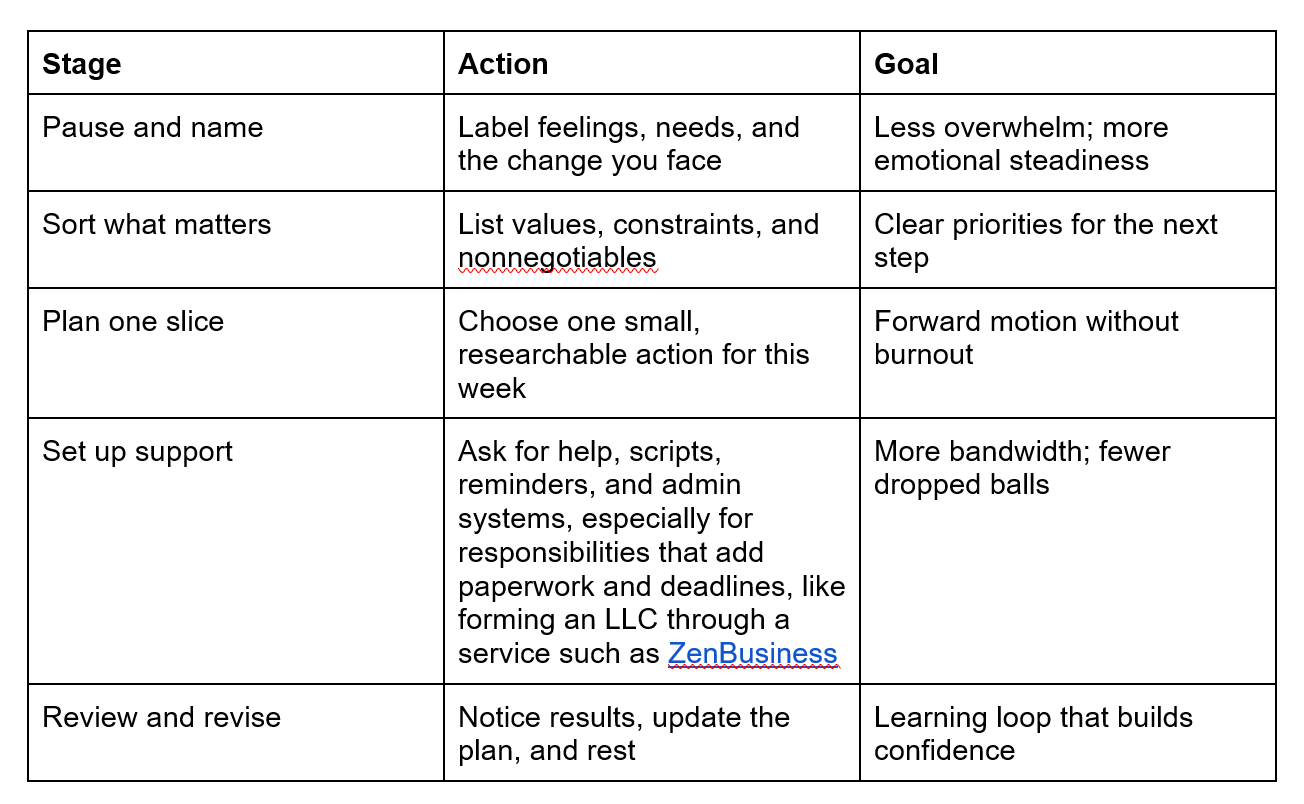
Each stage makes the next one easier: naming creates space, sorting creates direction, planning creates traction, and support protects your energy. The review step keeps you honest and kind, so your next pass is wiser instead of harsher.
Start with the pause; the rest can follow.
Habits That Keep You Steady Through Change
Try these gentle practices to stay grounded.
Big transitions get easier when you have small rituals that hold you, even on messy days. For midlife adults shaping an honest story about aging, these habits build calm, capture meaning, and keep you moving with confidence and care.
Three-Breath Reset
● What it is: Take three slow breaths, naming one feeling and one need.
● How often: Daily, especially before tough conversations.
● Why it helps: It lowers reactivity so choices come from steadiness, not panic.
Story Snapshot Journal
● What it is: Write five lines: what happened, what it cost, what you learned.
● How often: Weekly.
● Why it helps: It turns change into narrative, not just noise.
Mindful Minutes Walk
● What it is: Do 10 mindful minutes using mindfulness training as your pace guide.
● How often: Three times a week.
● Why it helps: Practicing attention supports lower stress levels during uncertainty.
Water-and-Check Routine
● What it is: Pair a glass of water with a quick body scan for tension.
● How often: Daily, mid-morning.
● Why it helps: Staying hydrated supports mood and energy when you feel stretched thin.
One Helpful Ask
● What it is: Send one specific request for help, with a clear deadline.
● How often: Weekly.
● Why it helps: It shares the load and reduces decision fatigue.
Pick one habit this week and shape it to fit your family’s real life.
Choose One Steady Step to Carry Change Forward Confidently
Big changes can shake routines, stir doubt and make even simple decisions feel heavier than they should. A steadier way through is to meet transition with encouragement for change, ongoing self-care and long-term wellbeing strategies that favor small, repeatable supports over pressure to “fix everything.” Over time, that mindset builds confidence building from the inside out, making uncertainty more workable and your days more grounded. Progress is one steady choice, repeated with care. Choose one next step this week: pause, reflect on what feels hardest, ask for support and commit to one calming habit you can repeat daily. A hopeful outlook grows when stability becomes a practice that protects health, resilience and connection.
Thank you to Denise Long of Grandmothering.Info for this guest post.
Grandmothering.Info: “You became a doting grandparent the day they were born, but you never imagined you’d be taking on the parenting role too. Your love for your grandchildren is unconditional, and now that you’ve become their primary caregiver, that love will grow in a way you never possibly imagined. All that’s left to do is find the right tools to support that growth, and we’ve got you covered.”