Midlife Crisis to Midlife Reset: Maria Leonard Olsen On How To Use A Midlife Crisis as an Opportunity to Embrace Change and Unlock New Possibilities
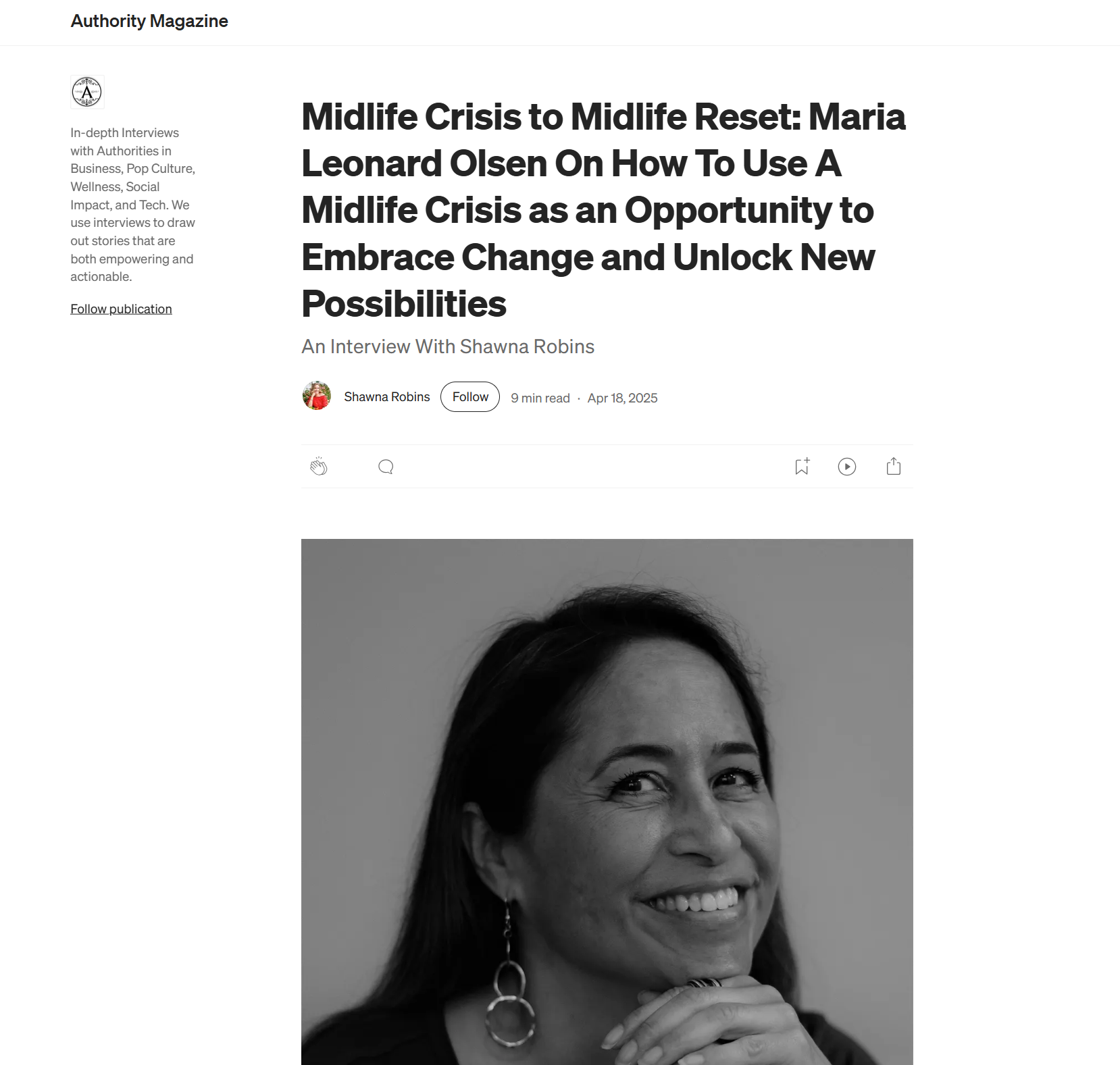
Many people experience a midlife crisis as a time of uncertainty, loss of purpose, or even fear of change. But it doesn’t have to be that way. Midlife can be a powerful turning point — a reset that opens doors to new opportunities, personal growth, and a fulfilling next chapter. As part of this interview series, we are interviewing Maria Leonard Olsen.
Maria Leonard Olsen is a civil litigation attorney in Washington, D.C. She also is an author, journalist, TEDx speaker, podcaster and mentor to women in recovery. Learn more at www.MariaLeonardOlsen.com.
Thank you so much for doing this with us! Before we dig in, our readers would like to ‘get to know you’. Can you tell us a bit about your background and your backstory?
Iam the child of a Filipina immigrant and American father and grew up in the Washington, DC area. My parents divorced in the 1960s and were excommunicated from the Catholic Church for that reason. As a biracial child, I felt that I did not really belong in the mostly white communities in which I lived and went to school. It was only later in life that I embraced my differences. My most popular book, 50 After 50: Reframing the Next Chapter of Your Life, is a proscriptive memoir that describes my big T and little t traumas over the course of my life and how I overcame them.
Can you share a story with us about what brought you to your particular career path?
My immigrant mother very much wanted me to be a lawyer, so I became one. I excelled at academics, so it was not difficult for me, but it was not my passion. I found side gigs that feed my spirit more, like podcasting, writing books and magazine articles, book marketing for female authors and more.
You are a successful leader. Which three character traits do you think were most instrumental to your success? Can you please share a story or example for each.
Resourcefulness was key to my success. I did not often feel that I was the smartest person in the room, but I knew where to find answers. When I was at a top-ten law school, surrounded by many Ivy-league educated classmates, I found that my resourcefulness allowed me to compete well.
My ability to network also has served me well. I cultivate helpful connections, which has helped me obtain jobs and business. I realized early in life that you never know who might be in a position to help you at some point in your life and career. For example, one of the reasons I became a political appointee in the Clinton Justice Department was because I had a good relationship with one of President Clinton’s longtime friends.
I also am open to learning. I strive to learn something new every day and know that every person and situation has the ability to teach me something. Over the course of my career, I have sought out mentors who have taught me important things that I could not learn in school.
What are some of the most interesting or exciting projects you are working on now?
I am writing two books — one on the unexpected consequences of consumer DNA tests and one tentatively called, 60 After 60: Finding Serenity in Your 60s or at Any Age. The latter is a sequel to my popular book, 50 After 50: Reframing the Next Chapter of Your Life. In 50 After 50, I write about my sobriety journey and how I moved past the destruction of my past.
Let’s now shift to the main part of our interview. Let’s start with a basic definition, so that everyone is on the same page. How do you define the idea of “Midlife Crisis”?
I define Midlife Crisis and a point in which one finds oneself rudderless and without any clear goals. It often happens when parents become empty nesters or at milestone birthdays.
What are the most common signs that someone is experiencing a midlife crisis?
Signs include disappointment with one’s current life, malaise, despair and a lack of hope for the future.
Beyond the cliches, what are some of the lesser-discussed challenges that people face during midlife?
I don’t think people discuss how hard it is when your children no longer need you in the way they did when they were young and you essentially were their greatest teacher. It can hurt when they push you away, despite it being our job to teach them how to be self-sufficient.
Sometimes people in midlife feel invisible and non-essential. I believe it is up to us to craft meaningful lives for ourselves and to cultivate joy, without seeking external validation.
Do you think societal pressures or expectations play a role in triggering or exacerbating a midlife crisis? If so, how?
We are all socialized to expect certain things in life. Much of what we expect does not come to fruition. We are fed a steady diet in the media of happy families and happily-ever-afters. Yet people change and life continues to throw challenges our way. Much of my success in midlife has been contingent on the ability to adapt to changing circumstances and practice acceptance of what I cannot control.
What mindset shifts are essential for transforming a midlife crisis into a period of renewal and positive change?
It is essential to see midlife as a launching pad for additional growth, a new chapter that we each can design for ourselves. Freed of some familial responsibilities, we can explore other avenues of growth. Think about and focus on what you can do at this point in your life. Practice gratitude.
Can you share a personal or client success story where a midlife crisis led to a transformative life reset?
At age 50, I got divorced, sober, became an empty nester and was living alone for the first time in my life. I felt like I was starting over in many respects. I had stopped practicing law to be an at-home mother to my children. I took another state bar exam and resumed my law practice. It gave me confidence in my abilities and resources to travel and do other things that brought me fulfillment.
How can someone overcome the fear of starting over later in life?
Courage is not the absence of fear, but feeling the fear and doing things anyway. All of us feel fear, but we do not have to let it govern our lives. The more we expand our comfort zone, even in small ways, the greater our confidence becomes. If you need a coach or therapist, get one. Seeking help can be a sign of strength.
Ok. Here is the main question of our discussion. Can you please share “5 Ways To Use A Midlife Crisis as an Opportunity to Embrace Change and Unlock New Possibilities”? If you can, kindly share a story or example for each.
1. Make a list of all the things you would like to try in your life, then prioritize the items by what is doable, in terms of time and resources. Then start doing them. I felt rudderless in my 50th year so, as a gift to myself, I made a list of 50 things I wanted to try and did them. In my book, 50 After 50: Reframing the Next Chapter in Your Life, I wrote about what each of these things taught me. I also talked about these lessons in my TEDx Talk, “Turning Life’s Challenges into a Force for Good.”
2. Don’t settle for the gray safety that sameness promises. If you do not like something about your life, do something different. I was unhappy slogging away as a lawyer, so I added some side gigs. I started a podcast, in which I interviewed inspiring women and asked them what they did to improve their lives. The podcast is called Becoming Your Best Version and the final question I ask of each guest is “What do you do to become your best version?” The answers are illuminating.
3. Do not be afraid to seek help. Find a coach or a mentor. If you see someone living a life that you want, invite them to coffee or lunch and ask them questions. Most people like to talk about themselves. Listen to TED Talks and podcasts to seek ideas. I put one on every day as I am getting ready for work and when I am driving.
4. Surround yourself with people who are positive and encouraging. Avoid energy vampires. Learn to say no and to stop people pleasing. Cultivate a tribe of people who can help you or who bring out the best in you. Get an accountability partner for goals that you set. When I wanted to increase my physical activity, I asked a friend to meet me for weekly walks. That kept me on track for my walking goals.
5. Remember that no one is responsible for your happiness but you, and that your life is happening right now. It is up to you what you do with whatever time you have left. None of us knows how much time we have in life. Realize that each day is a gift and make the most of it. Losing friends and family members made me acutely aware of this fact. So I am intentional about how I spend each day.
What role does self-compassion play in navigating a midlife crisis?
Self-compassion is essential to self-care. Put down the bat. Talk to yourself like you would talk to someone you love. I often talk back to the negative voice in my head. We cannot control our first thought, but we can control our second thought and our actions.
How important is physical health when navigating life changes in midlife?
Without health, we cannot do very much in life. Physical health challenges change as we age, so we must strive to adopt healthy practices. Stay active. I often build activity into my days while waiting. I can dance or do squats when waiting for something to cook, for example. It may sound silly, but cumulatively can increase my fitness level.
How can someone maintain the momentum and positive changes made during a midlife reset for the long term?
Hold yourself accountable by making lists of goals. Share your goals with others. I even post goals on my mirror from time to time. It is up to you to prioritize what is important to you. Your 90-year-old self will thank you for lifestyle changes that you make now that can increase your quality of life later. It helps me stay committed to my goals by journaling about my life and reading old journal entries to see my progress.
How can our readers further follow your work online?
Sign up for my email list and learn about my work and events at www.MariaLeonardOlsen.com and follow me on social media @mariaolsen49 and @fiftyafter50. Thanks!
This was very meaningful, thank you so much. We wish you only continued success on your great work!
About the Interviewer: Shawna Robins is an international best-selling author of two books — Powerful Sleep — Rest Deeply, Repair Your Brain and Restore Your Life, and Irresistibly Healthy — Simple Strategies to Feel Vibrant, Alive, Healthy and Full of Energy Again. Shawna is the founder and CEO of Third Spark, an online wellness hub for women over 40 who want to reignite their sleep, reset healthier habits and respark their lives. Shawna is a sleep expert, hormone health expert, and a National Board-Certified Health and Wellness Coach (NBHWC). She has been featured on many podcasts including Dr. Mindy Pelz’s “The Resetter Podcast” and in Authority Magazine, Thrive Global, and The Huffington Post. A free download of her latest book can be found at www.thirdsparkhealth.com/powerful-sleep/ You can follow her on YouTube, Facebook, Instagram and LinkedIn.
https://medium.com/authority-magazine/midlife-crisis-to-midlife-reset-maria-leonard-olsen-on-how-to-use-a-midlife-crisis-as-an-af97b3f2d014